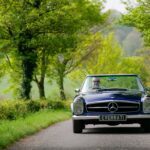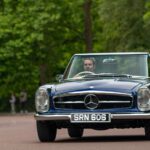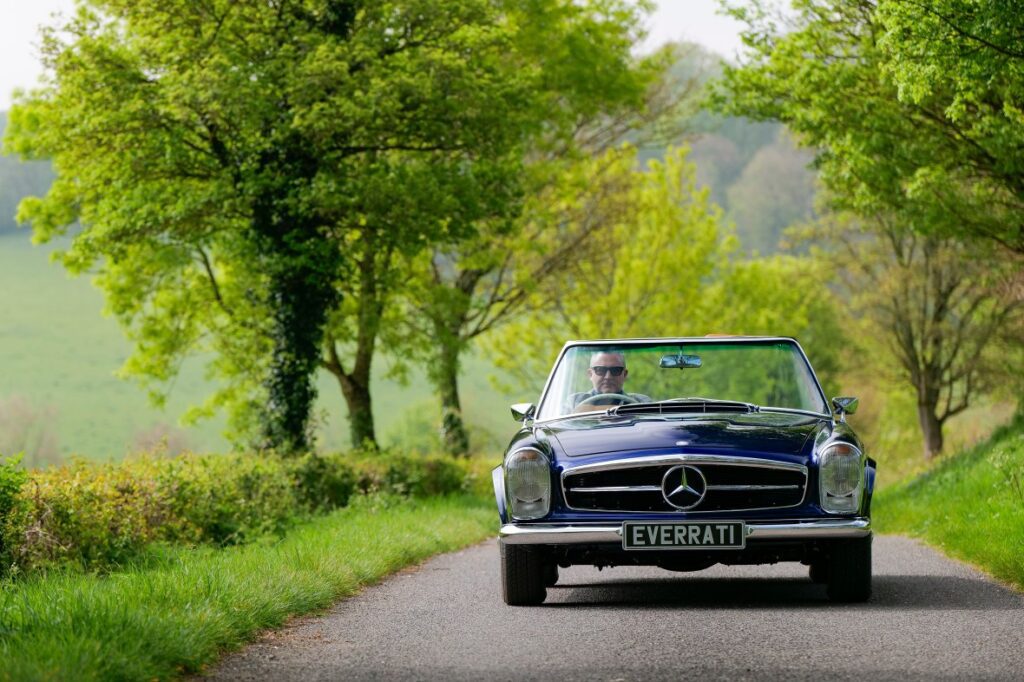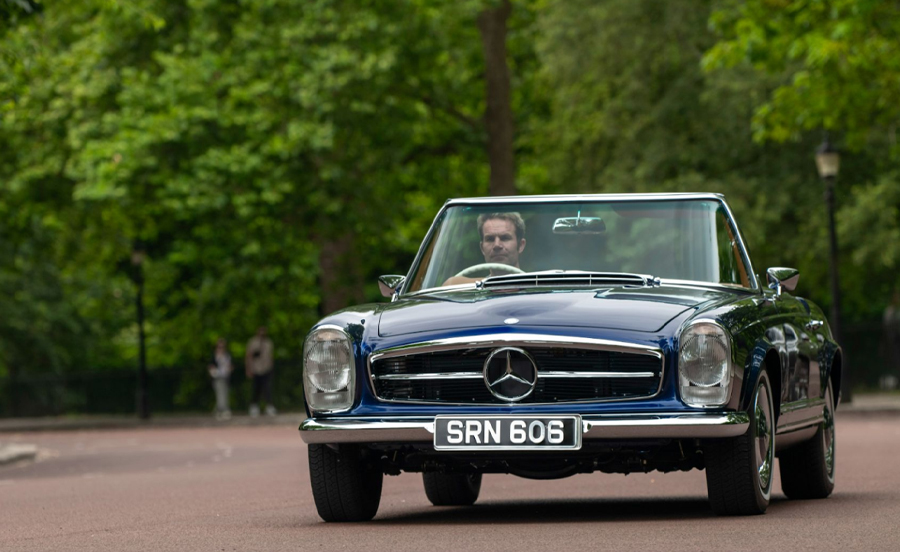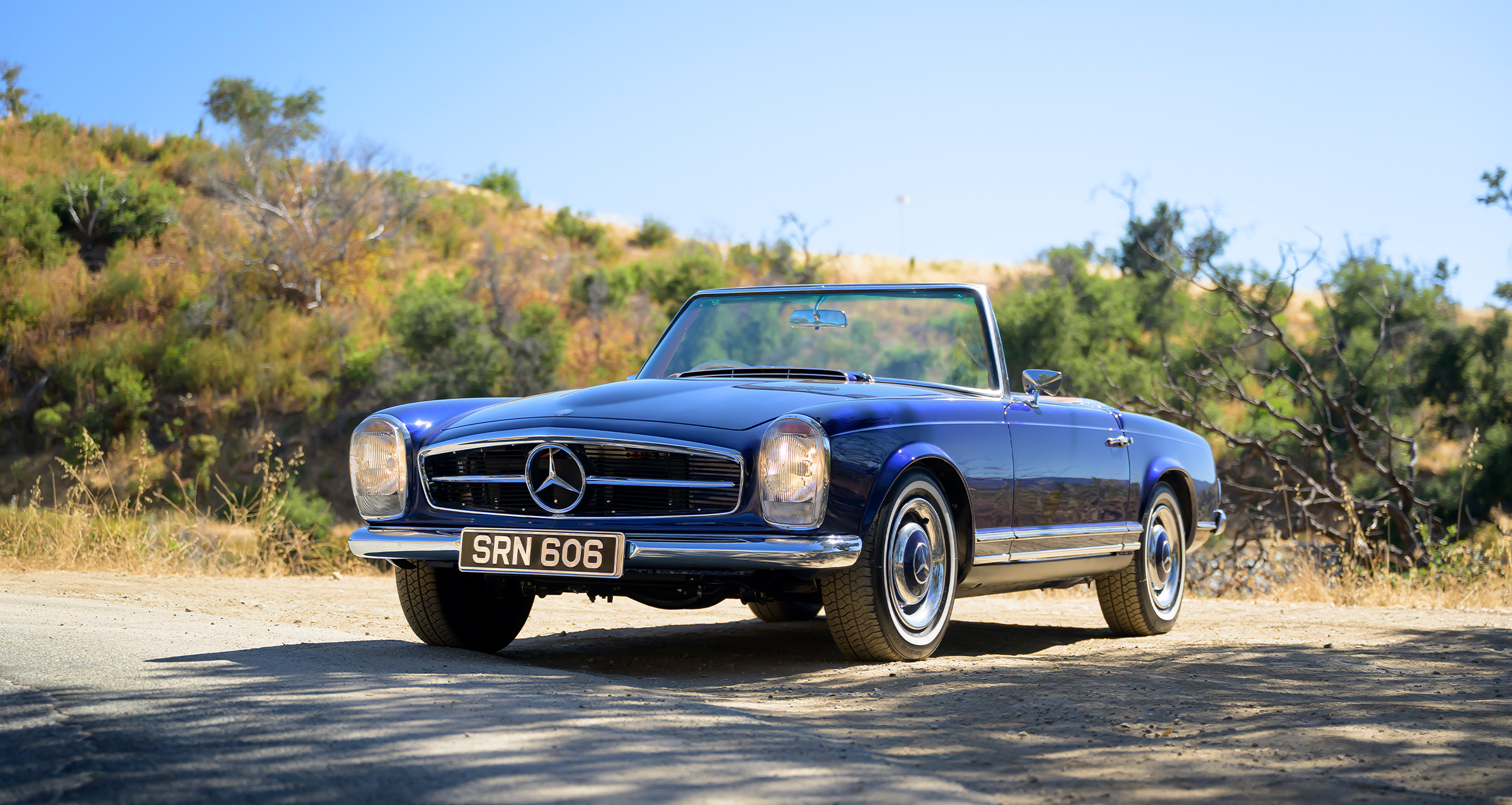
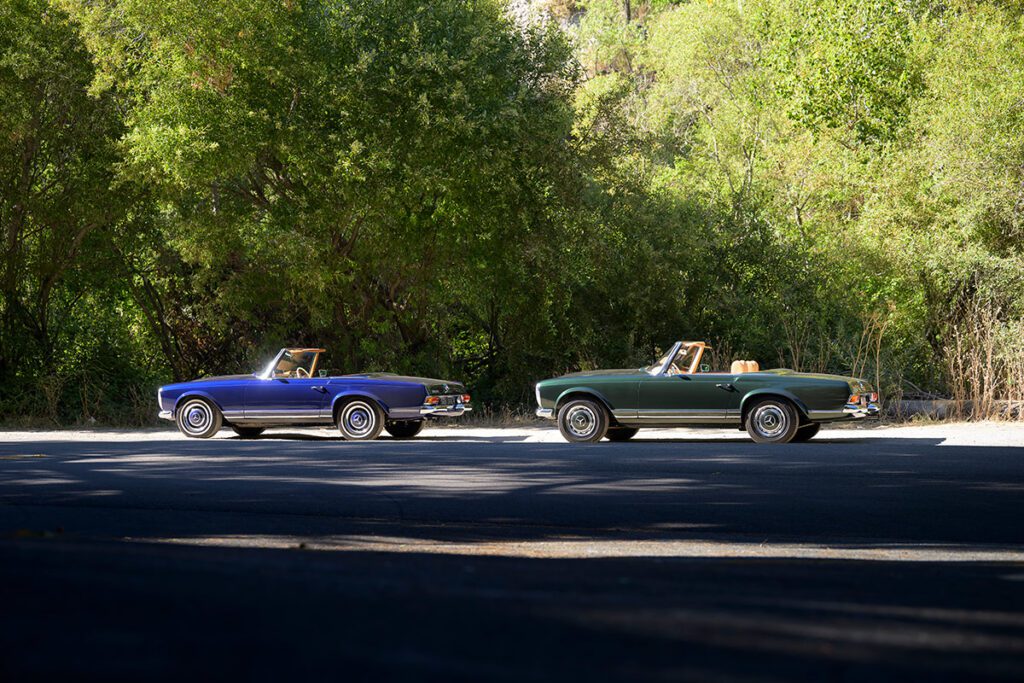
The Mercedes-Benz W113 SL earned its Pagoda nickname from that distinctive concave hardtop roofline. Built from 1963 to 1971, these weren’t trying to be race cars. They were elegant grand tourers designed for covering ground in comfort and style.
It turns out that the original mission makes them surprisingly well-suited for electric conversion.
Explore electric Mercedes-Benz Pagoda for sale
Why Is the Mercedes-Benz W113 Pagoda Light Enough for Electric Conversion?
Original Pagodas weighed around 1,300 to 1,400 kilograms, and that’s light for a car with such a captivating presence. Mercedes used high-strength steel where it mattered while keeping overall mass reasonable.
This matters when you’re adding a battery pack. You’re not starting with an 1,800-kilogram vehicle that needs massive capacity just to move itself. A 63kWh pack adds weight, but the Pagoda’s lightweight foundation means the finished car still feels agile rather than heavy.
An E-Type is bigger and a DB6 weighs more. The Pagoda’s intentional packaging means you need less battery for usable range, and the handling doesn’t get overwhelmed by added mass.
Why Does Electric Power Suit the Mercedes-Benz Pagoda Better Than the Original Engine?
The inline-six engines were smooth and refined, but not outrageously powerful, with the hottest 280SL making about 170 horsepower. These cars succeeded through overall refinement and pure driver engagement, not raw performance.
Electric propulsion transforms this completely. Instant torque suits a grand tourer perfectly, and its smoothness exceeds what the inline-six ever provided. Silent operation elevates the luxury experience rather than taking something away.
Here’s the kicker: you’re not replacing a character engine that defines the car’s soul. The Pagoda’s appeal was always about effortless progress and refined touring. Electric power delivers that mission better than the original drivetrain did.
How Does the Pagoda’s Chassis Accommodate an Electric Powertrain?
The W113’s engine bay readily accommodates an electric motor. The chassis provides natural spots for battery modules without affecting its structure. The mechanical layout is straightforward enough that you aren’t constantly working around obstacles during conversion.
Battery placement enhances weight distribution in ways that improve handling compared to the original front-heavy design, and it also lowers the center of gravity. To the driver, the car feels more planted through corners.
How Do Owners Typically Drive a Mercedes-Benz Pagoda?
Pagoda owners drive these for weekend tours, auto shows, and invigorating drives down iconic routes. Nobody’s using a 1960s Mercedes for daily commuting or cross-continental expeditions.
A 200-mile range covers most realistic scenarios for how these cars actually get driven. You’re enjoying it for a few hours at a time, often in areas where emissions restrictions might otherwise create problems.
Urban driving improves by leaps and bounds. The Pagoda’s compact footprint works well in traffic, but the original transmission and engine felt fussy at low speeds. Electric drive eliminates that completely, offering silent, smooth, effortless movement at any speed.
London’s ULEZ? Not a problem anymore. Drive right through historic city centers across Europe with emissions restrictions.
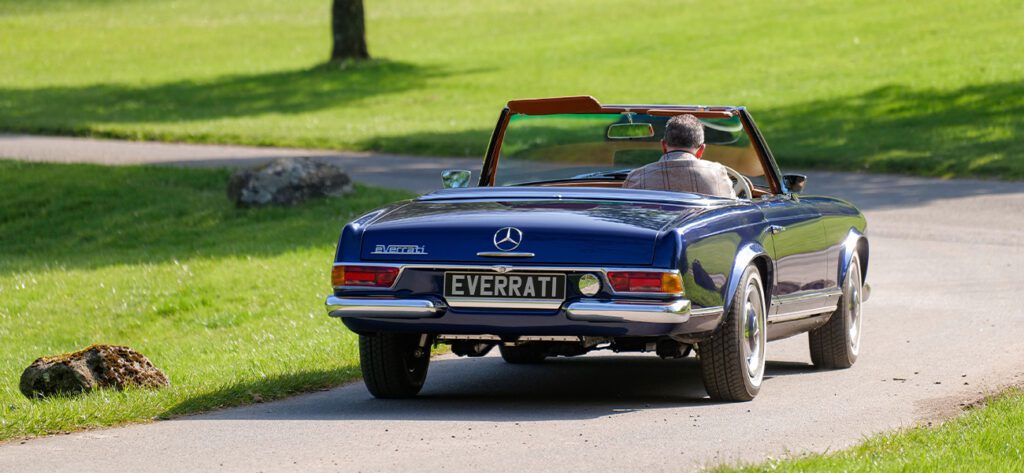
What Is Preserved When the Mercedes-Benz Pagoda Is Converted to Electric?
The Pagoda’s appeal was never about lap times or exhaust note. It was about timeless design, structural quality, and driving something genuinely elegant. Electric conversion preserves everything that made these special while eliminating what made them frustrating.
That roofline still turns heads, the interior proportions remain perfect, and the driving position feels exactly right. What changes is reliability, usability, and the ability to enjoy the car without hunting for period-correct parts or dealing with aging mechanical systems.
Why Is the Mercedes-Benz W113 Pagoda Perfect for Everrati EV Conversion?
Some classics lose their soul when converted. Strip the V12 from a Lamborghini Miura and you’ve destroyed what made it significant. The Pagoda is different. It was engineered for people who wanted performance without drama, luxury without excess, and styling that never ages out. Electric propulsion delivers better than 1960s technology ever could.
You’re not erasing character. You’re fulfilling the original design intent with technology that didn’t exist when these cars were built.
The Pagoda deserves to be driven, not stored, and electric conversion makes that possible. Everrati will show you what’s possible for yours.