The electric-car revolution is underway. But what will the greener future of driving actually look – and sound – like? Motoring journalist TIM RODIE reports on some of the innovations propelling EVs into the garages of classic-car collectors.
When Porsche partially pulled the plug on an all-electric range, pumping petrol back into its plans, the EV world showed worrying signs of stalling. Amidst inconsistent global support, many mass-market car customers – wary of tackling long trips in EVs or unable to charge up at home – are opting for ‘electric-lite’ options such as hybrids. Then there’s the unenviable depreciation most mass-produced electric cars suffer.
But there are more positive stories to be told in the rarefied realm where electric cars are seen as four-wheeled haute couture. The silence, cleanliness and immediate power of electric propulsion are proving a hit with car connoisseurs, and in ways you may not expect. After all, it’s old news that EVs can scramble the mind and body with furious acceleration, but there’s also a world of more considered craftsmanship that’s been unlocked by electrification.
Showcasing speed
Rewind to 2007. Croatia. Teenager Mate Rimac is busily converting his old BMW 3 Series to electric power, having blown the engine up on track and drifting events. He probably didn’t see this coming, but the challenges he faced creating this scratch-built EV set him up to become one of the world’s first electric hypercar magnates, at the helm of Rimac Automobili – and he’s now also CEO of iconic French brand Bugatti.
Rimac Automobili currently produce the Nevera R, a €2.3 million (roughly $2.6 million) electric rocketship that looks more like a Hot Wheels model than anything designed for the road. Production is limited to just 40 units worldwide, but it’s the effect it has on your internal organs that’s perhaps most astonishing. The Nevera R is currently the fastest accelerating car in the world, taking just 1.8 seconds to get from 0-62mph, with its 2080hp quad-motor powertrain getting you from 0-186mph in a diaphragm-troubling 7.9 seconds. It sounds deeply uncomfortable, but this is unquestionably an object of carbon-fiber artistry that deploys electrons in the pure pursuit of speed.
Electrifying the past
But what if your quest for a luxury EV doesn’t demand outrageous power in a vehicle that’s undoubtedly wasted on public roads littered with speed limits, potholes and traffic jams? A look in some smaller, less glamorous workshops reveals a nascent band of low-volume manufacturers and engineering enthusiasts providing a valuable – if not uncontroversial – service for the discerning enthusiast. Meet the electric restomod. (That’s petrolhead for ‘restoration and modernization’.)
A concept sure to drop monocles into oil-stained workshop coffee cups across the motoring world, an electric restomod not only replaces old petrol engines with reliable electric power, it gives owners a chance to reupholster, reimagine and relive a classic-car dream, but with zero tailpipe emissions.
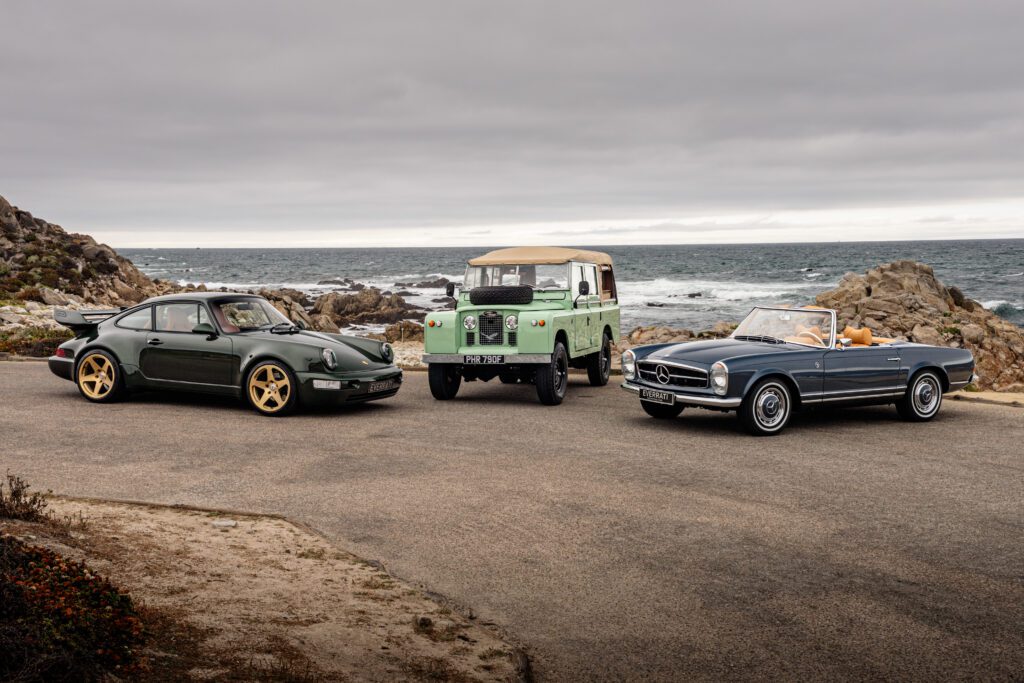
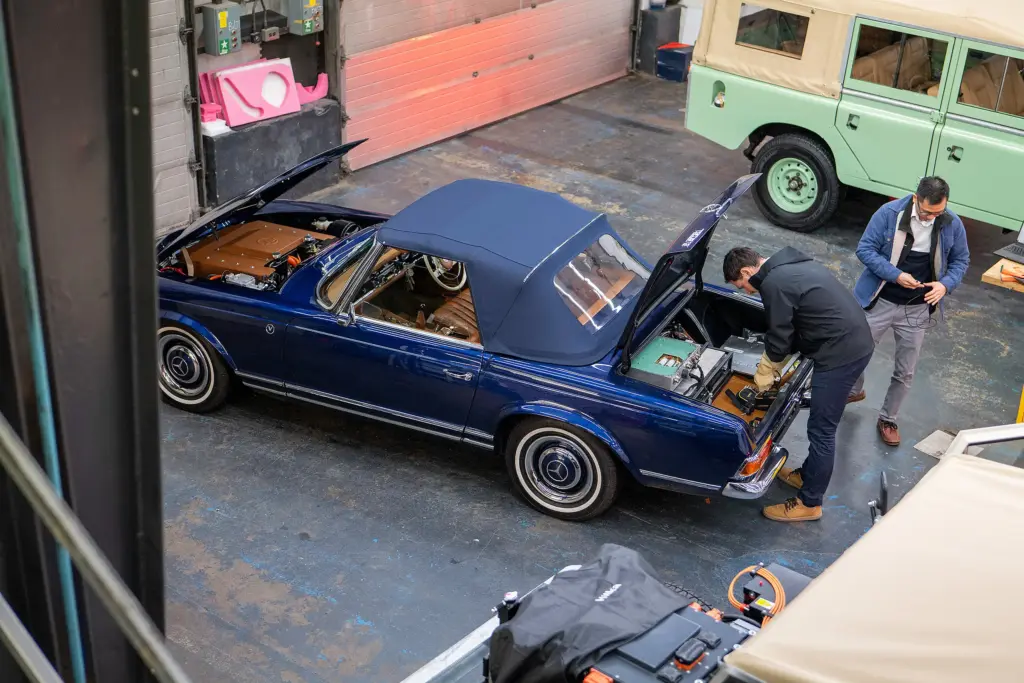
One such company is based out of a workshop on a disused US Air Force base in the heart of Oxfordshire, England. Here, Everrati creates sublimely detailed electric-converted Porsche 911s, Land Rovers and Mercedes-Benz Pagodas – often destined for both coasts of the USA as well as the sparkling boulevards of the Emirates.
Serial fintech entrepreneur and petrolhead Justin Lunny founded the company after being challenged by his daughter on his personal contribution to climate change. Everrati’s co-CEO is Rhodri Darch – whose passion for interesting EVs also partly stems from a responsibility to future generations.
“My nine year-old thinks petrol stinks,” Darch explains. “When we went to Goodwood Revival in an electric Porsche 964, he asked me to wind the windows up because the fumes from surrounding cars were making him feel sick.” A quick glance at some of the vintage wheels that regularly turn up at the annual event and you understand why.
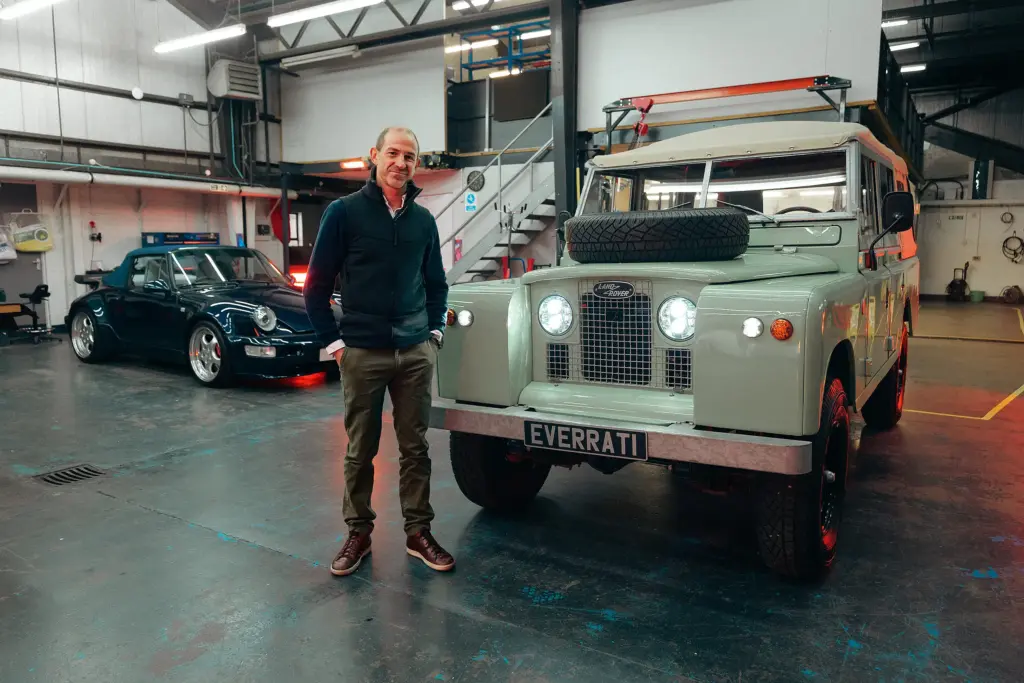
“Our customers may have smoky stuff in their car collection, but they’ve generally already made the leap to EV,” says Darch of the typical Everrati client. “But the androgynous nature of mass-market EVs doesn’t appeal – they’re designed for aerodynamics, designed for coefficients of drag, but not designed for beauty.”
And so the team builds their restored EVs around as many anachronisms of original classic cars as possible – whether that’s a Porsche 911’s unusual tail-heavy weight distribution, or a Land Rover’s steering that’s only rivalled in vagueness by a politician’s promise. “Many classic cars are fundamentally flawed,” says Darch, “but that’s why we love them. That’s what gives them soul and character. We go to great lengths to keep that stuff in.”
Soul System
After a tour of the Everrati HQ (complete with rapid-prototyping machines, countless leather samples and blocks of foam to see where batteries can nestle into cars designed more than half a century ago), I was handed the key to the company’s latest Land Rover Series IIa.
It takes about 10 seconds to realize the team here are onto something. The 215hp electric motor feeds into an original Land Rover transfer case, giving a delicious mechanical growl under my seat – a baritone rumble accompanied by the chilly falsetto of wind passing through the panels. Thankfully, you now get heated seats, working air-con and a proper sound system. Farmers from the 1960s would think I’ve gone soft.
Likewise, my wrists are somewhat saved from a workout at low speeds by the inclusion of electric power steering, but the original Land Rover steering box means I need to constantly saw at the delicate wooden steering wheel just to maintain my heading. As per the original. There’s a sense of total engagement, character and originality that leaves most other EVs for dust. Even if I still struggle to crack 65mph flat out on the airfield’s crumbling concrete, it’s an unsubtle reminder that cars were more fun when they weren’t perfect.
With 150 miles of range and a modern fast-charging setup, the only old-fashioned thing about the project is the timeless style of the bodywork and interior. Low-carbon Bridge of Weir leather – as used by the likes of Aston Martin and McLaren – gives the cabin a deeply evocative feel and smell, while the pristine bodywork can be painted in whatever classic hue you desire.
“We’re at the playful boundary between analogue and digital,” Darch explains as a team of engineers work on the latest motor control unit around a whiteboard. “We bring punchy torque and seamless power delivery, but blend it with weighty steering befitting a classic car, so you can really lean on it in corners.”
The cost of progress
Everrati’s quoted $250,000 starting price (plus donor car) feels fair given the detail and exclusivity on offer. One of the company’s altogether sportier Porsche 911 restomods will set you back about $650,000. Not unreasonable considering the attention to detail given to retaining driving dynamics with a cutting-edge electric powertrain. In a world where petrol-powered 911 restomods will easily set you back seven figures, this classic future looks like good value.
While the broader electric car market may be taking uncertain leaps towards mainstream acceptance, the electrification of beautiful older designs is already taking off. Darch has ambitions to fulfil 100 commissions per year in the near future. And it seems a realistic aim. There’s a lot to enjoy about the electric restomod. The driving experience – bar the engine noise – is all there, through your palms, backside and stomach, all wrapped up in a zero-emission vehicle with all the associated environmental benefits.
Sprinkle on top the opportunity to create an almost factory-fresh classic icon with colors and trims of your choice, and it’s little wonder more customers than ever are signing up.
A sunset drive in an electric Porsche 964 on a twisting mountain road, with only gear whine and the gentle pinging of stones off the wheelarches for company? With the promise of period-correct handling and an exhilarating punch from the electric motor, I’m converted.
Reporter: Tim Rodie
Source: Forbes